
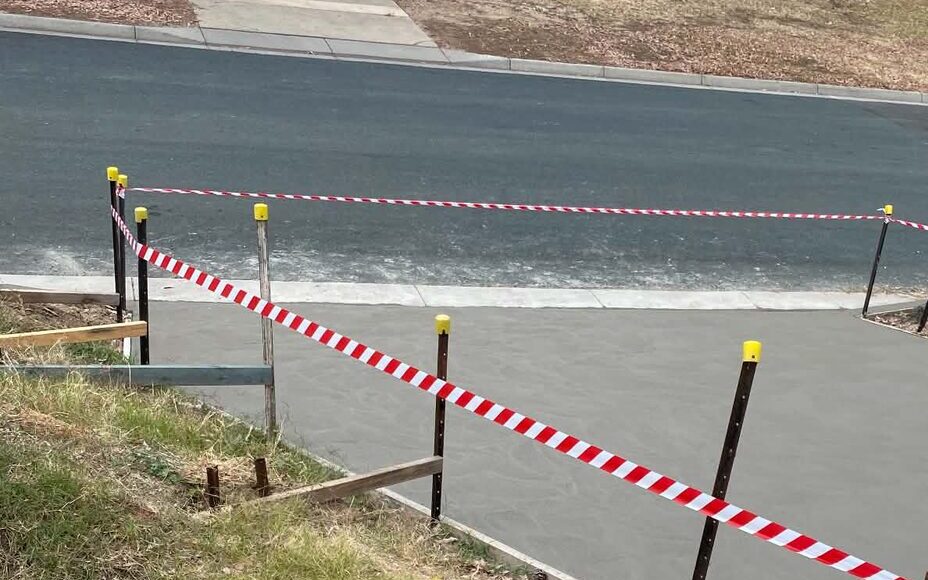
The crossover is the strip of driveway between the property boundary and the road, crossing the nature strip and footpath. It looks like part of your driveway, but it sits on council land, and that changes how the job works.
Why a permit comes first
Every Victorian council controls what gets built on its land, and crossovers are the common example. Before a new crossover is built, or an old one is replaced or widened, the council issues a permit. The permit sets the rules for that street: the material, the width, the levels where it meets the footpath and kerb, and sometimes the finish, so the new work matches the street.
Building without a permit can mean being told to pull the crossover out at your own cost, so this step is not optional.
How the process usually runs
Apply. The application goes to your local council, usually with a simple site plan showing where the crossover goes. Fees and forms differ between councils.
Wait for approval. The council checks the plan against its requirements, including anything underground like services and drainage. Timeframes vary, so apply early if the crossover is part of a bigger driveway job.
Build to the permit. The concreter forms and pours the crossover to the approved levels and dimensions. Some councils inspect the formwork before the pour, some inspect the finished work, and some both.
Who handles what
The permit application is usually lodged by the property owner or the concreter, and it is worth agreeing upfront who does it. An experienced local concreter will know your council's requirements and can steer the application.
If your job includes a crossover, mention it when you send the job through, and include a photo of the nature strip and kerb. The crossovers service page covers the work itself, and the answers on our FAQ page cover the rest of the process.